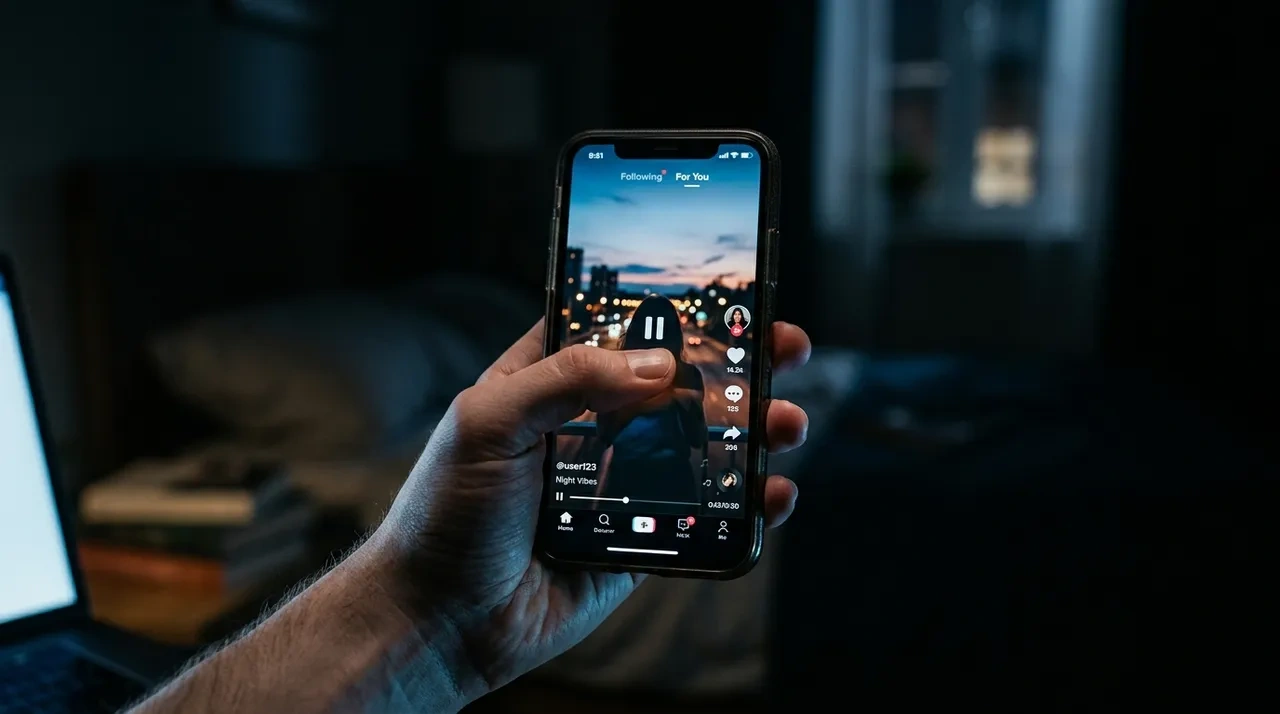
There's no trick that makes a video go viral. There's a first second that either earns the second one or doesn't. Almost everything creators argue about, from the edit to the lighting to the posting time, happens after that call is already made.
What follows is ten patterns for those three seconds, and they're structural. These shapes keep showing up in short-form hooks because they match how attention behaves. I didn't analyze a dataset, and a pattern doesn't promise anything. It gives you a starting line your viewer's brain has to answer.
What a hook is
A hook is a pattern interrupt with a short half-life. Your viewer's brain is running a prediction: this looks like the last hundred videos I scrolled past. The first three seconds exist to break that prediction and drop a question in its place. Break it and they stay long enough to get the answer. Miss and the thumb keeps moving.
So a hook isn't information, and it isn't a claim. It's a broken prediction plus a reason to stay for the fix. Almost every good hook pulls a single lever. Worth naming them before the list.
- Negative / Fear moves the problem into your viewer's own life, where it's already happening.
- Curiosity / Secret opens a gap between what they know and what they suspect they're missing.
- Visual Shock puts something on screen the eye can't classify fast enough to leave.
The ten patterns below are grouped by whichever lever they pull hardest.
Negative / Fear
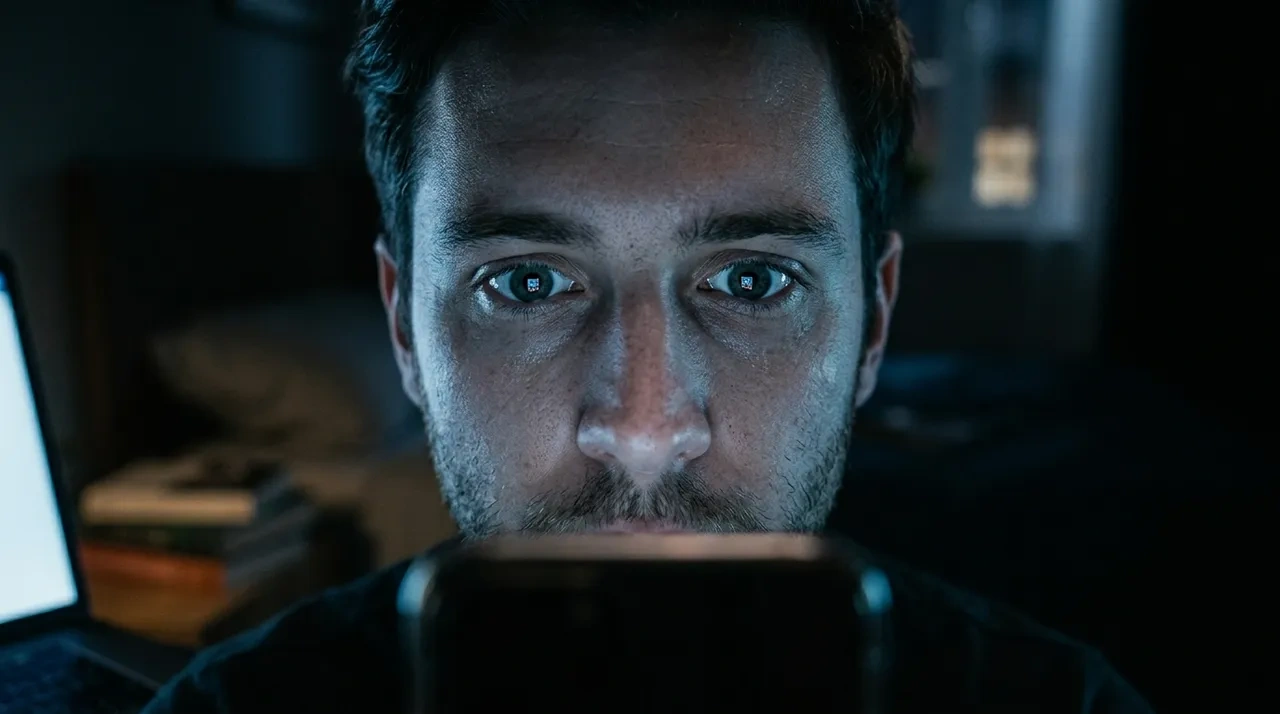
These hooks work because the viewer stays one second to find out whether the threat applies to them. The cost is that they land only on problems the viewer already suspects.
1. The Wrong Way
You've been doing this wrong your whole life.
Attack an existing habit, not a missing one. You're not asking them to want something new. They already do it, and the hook reframes it as a mistake. That's the cheapest second of attention there is. Our pasta example opens on exactly that line: three hooks for a 60-second pasta video.
Where it breaks: when the "wrong way" is trivial, or the fix is obvious. If the viewer can guess the correction before you say it, the gap closes and they leave.
2. The Cost You Never Noticed
This is costing you an hour every morning and you've never counted it.
Name a loss that's already happening, and make it specific. "A loss of time" is a claim. "An hour every morning" is a number your viewer can check against their own day.
Where it breaks: when the cost stays vague. The moment you say "a lot of time," the viewer has to take your word for it, and they won't.
3. The Stop Sign
If you're doing this at night, stop.
Aim the fear at an action, not at the person. It reads as protection instead of blame, so the viewer doesn't feel accused. It lands hardest when the payoff arrives inside the same three seconds.
Where it breaks: when it's a scare with nothing behind it. A stop sign that leads to a shrug loses the viewer permanently, and they remember.
Curiosity / Secret
These buy attention by withholding exactly one thing. The rule is strict: you have to deliver it. A withheld noun is a debt, and short-form audiences collect.
4. The Withheld Noun
It wasn't the army. It was something nobody thought to write down.
Name the problem, name what it isn't, and stop one word short of the cause. The viewer finishes the sentence themselves. That's why it holds, and why you owe them the real answer in the next breath. The faceless history example does it with Rome: it names what didn't kill the empire and withholds what did.
Where it breaks: when the withheld thing is smaller than the setup promised. Tease a secret, reveal a shrug, and the viewer leaves twice.
5. The One Thing You Already Own
Restaurant food tastes different for one reason, and it's already in your kitchen.
Promise something specific and gettable. "One ingredient," "one setting," "one line": a secret with a shape is worth staying for. A secret with no shape is noise.
Where it breaks: when "the one thing" turns out to be generic. If the reveal is "practice" or "attention to detail," you've cheated the viewer and they know it.
6. The Wrong Suspect
Everyone blames the water. The water is innocent.
State the obvious explanation, then deny it. It forces a closed question back open, and a reopened question is harder to walk away from than one they'd never considered.
Where it breaks: when the real cause is less interesting than the one you ruled out. Deny the obvious and deliver the boring, and the denial reads as a trick.
7. The Count
Three things, in order, that changed how I record.
A number is a contract. The viewer knows there's an end, knows its shape, and knows roughly how long they're committing to. That certainty is itself a reason to keep watching.
Where it breaks: when you pad. If the number is three and one of them is filler, the contract is broken. Every future number you promise gets discounted.
Visual Shock
These hooks ask nothing of the ear. The frame arrives already at the payoff, and it works with the sound off. Plenty of viewers watch on mute.
8. The Mid-Action Open
(no line: the first frame is already the peak)
Start after the setup. No wind-up, no establishing shot, no "in this video." This is the cold open, and it starts at the moment the thing happens. Let the viewer infer the two seconds you skipped.
Where it breaks: when the peak needs context to read as a peak. A payoff that looks like a random image is just a random image.
9. The Impossible Frame
(one image that shouldn't exist)
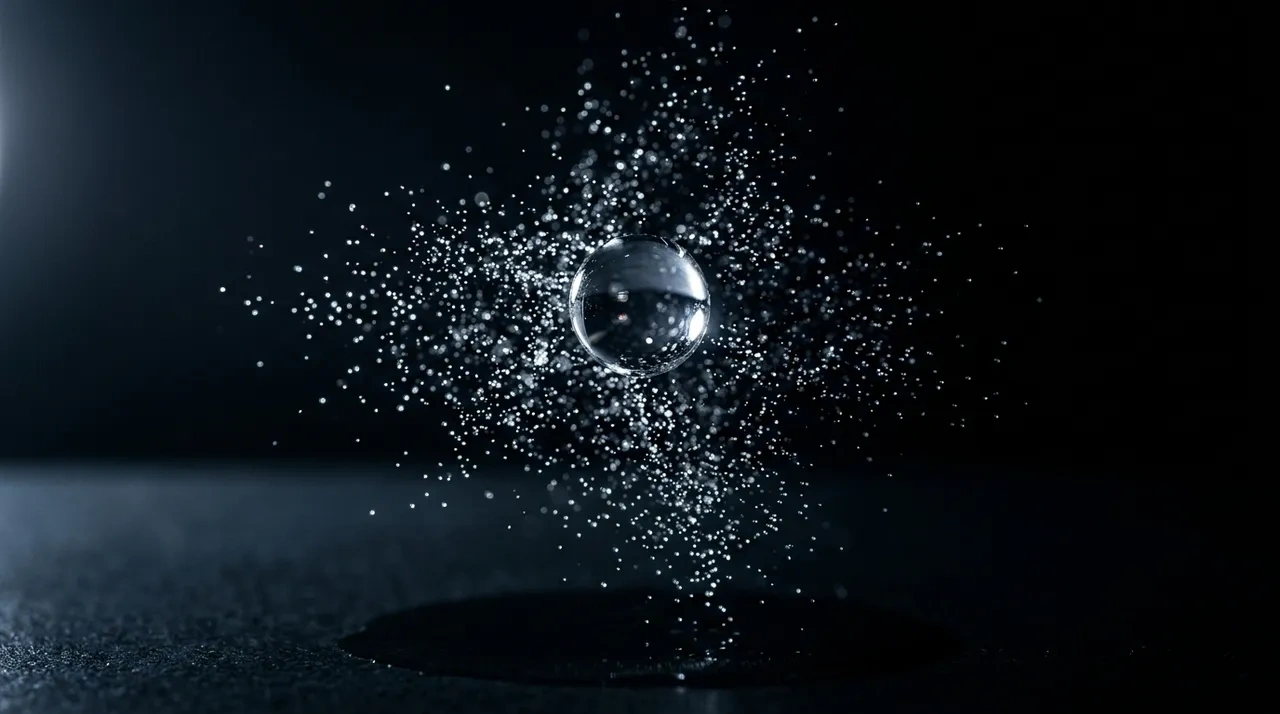
A frozen aqueduct at dawn. A bead of sweat caught in mid-air. The eye stops because it can't file the image fast enough. In that half-second, the sentence lands.
Where it breaks: when the image is merely pretty. Beauty is familiar and gets scrolled past. Impossibility is what makes the eye pause.
10. The Mismatch Cut
(two shots that don't belong together)
Put a kitchen and a courtroom in the same second, and the brain waits for the connection. The mismatch is the hook; the resolution is the video.
Where it breaks: when the two shots have no reason to meet. A cut that never resolves is a cut the viewer reads as a mistake.
How to use these
Don't pick one and hope. Write three hooks for the same topic, one per lever, and say them out loud. The strongest hook in the world fails if you can't deliver it without stumbling. That's how the AI video hook generator works too: every topic comes back as three hooks, one per lever, each with a script, an image prompt, and a video prompt.
Want to see the levers applied to finished topics before you write your own? The example library lays them out side by side, with the script and the image and video prompts for each.
None of this was guessed at: the generator's prompt came from the same analysis you just read, then got rebuilt against real examples. Put in a topic of your own and watch what comes back.
What these patterns are not
They aren't a guarantee. The retention estimate printed on a card is a model's estimate, not a measurement of your audience. Use it to rank three ideas against each other. It isn't a promise about how people will behave.
And they aren't a dataset. Everything above is structure: the shape of a first sentence that gives a viewer a reason to stay. None of it rests on a number I couldn't measure. When a hook works, it's because it broke a prediction and left a question behind. That part you can check yourself, every time, before you post.